Research is an absolutely vital part in any design process. I like to use many different research methods in order to competently complete different pieces of work. I use the Internet a lot as it is a great source of varied information. books can also be very useful as some of the information in books can sometimes not be found anywhere else.
The starting point i felt most comfortable with was the In/Front of method, i think this was the best starting point for research from my point of view, think it gives a good base in which to continue from. The starting point i didnt particulary like was probably the behind method, i didnt really feel that the starting point had many beneifts and i doubt i would be using this one in the future.
My creativity has been mainly academically based over the past few years. All the way through school i have always chosen to do creative subjects and courses. For A-Level i chose both Product Design and ICT which were quite high on creativity. For Product Design i was required to think up many different projects from a small brief and develop these to create a final piece. ICT was a very similar concept, being given a small brief and then creating and developing different ideas to get to a final destination.
When going through the design process creativity is a very important quality as the ideas can change very quickly and the development can change paths many different times before things are settled on.
For my main Product Design project at A-Level we were briefed to make a piece of contemporary furniture. The brief was vague so that creativity could be as high as possible. this was much the same in my ICT project as the brief was also quite vague.
I have found however that in the Multimedia course the need for creativity is as high as ever. I have noticed from only the first few months of the course that you are given so much space to be creative and go in a any direction that you choose, i believe this was shown especially during the Pixilation project and also in the Interactive Narratives project.
Showing posts with label SPP1. Show all posts
Showing posts with label SPP1. Show all posts
Tuesday, 24 February 2009

Monday, 2 February 2009
Practitioner Development
I think that practitioner development is not worked on/improved purposely. I think it is being constantly improved day by day without me realising it. Everything i do, whether I'm researching on the internet or looking at different pieces of work, it is always being worked on.
A good example of this is when I'm looking through other peoples work and through their blogs. I like to look at other peoples blogs and work on a regular basis. I think by doing this i am widening my knowledge within the multimedia arena and also improving my practitioner. I like to use YouTube a lot also, there are thousands of videos to look through that are closely related to what i am doing.
Another example of this can be when I'm creating a video or animation for university work or for personal use, i often listen too many pieces of music before i find the right one that fits. I feel that it is vital to listen to as much music as possible and also keep updated with new music that is being released. I usually manage to find the prefect soundtrack that i want in my own collection, however i may be required to use music which isn't from my own personal collection. The perfect example of this is for my pixilation project, i used Kanye West - Stronger for this, when the video is viewed together with the soundtrack i think it is very effective.
In order to develop my personal skills i also watch a lot of internet tutorials in an attempt to improve my skills on different types of software. Recently i have watched tutorials for Photoshop, Premiere Pro, Flash and most recently 3Ds Max. I think by watching these tutorials you are being taught by the best people and also learn new things for yourself.
Another way i develop my personal skills is to help my friends with their work. I have a housemate who studies Interior Architecture and Design in his second year. He is currently working on a large project for Nottingham's' Trinity Square. I have been helping him come up with ideas and also helping him develop these ideas. With my input as well as his own knowledge i believe the idea we came up with is an extremely good one.
A good example of this is when I'm looking through other peoples work and through their blogs. I like to look at other peoples blogs and work on a regular basis. I think by doing this i am widening my knowledge within the multimedia arena and also improving my practitioner. I like to use YouTube a lot also, there are thousands of videos to look through that are closely related to what i am doing.
Another example of this can be when I'm creating a video or animation for university work or for personal use, i often listen too many pieces of music before i find the right one that fits. I feel that it is vital to listen to as much music as possible and also keep updated with new music that is being released. I usually manage to find the prefect soundtrack that i want in my own collection, however i may be required to use music which isn't from my own personal collection. The perfect example of this is for my pixilation project, i used Kanye West - Stronger for this, when the video is viewed together with the soundtrack i think it is very effective.
In order to develop my personal skills i also watch a lot of internet tutorials in an attempt to improve my skills on different types of software. Recently i have watched tutorials for Photoshop, Premiere Pro, Flash and most recently 3Ds Max. I think by watching these tutorials you are being taught by the best people and also learn new things for yourself.
Another way i develop my personal skills is to help my friends with their work. I have a housemate who studies Interior Architecture and Design in his second year. He is currently working on a large project for Nottingham's' Trinity Square. I have been helping him come up with ideas and also helping him develop these ideas. With my input as well as his own knowledge i believe the idea we came up with is an extremely good one.
Tuesday, 25 November 2008
Colour Change #2

 This is a photo of Manchester City Centre at night. I wanted to change the colours to emphasise the lights as much as possible. I altered the Hue and saturation in Photoshop to achieve the blue buildings and bright yellow lights. I think this change has been quite effective, there is now a better contrast between the two.
Colour Change #1


This is Newcastle Uniteds' football ground St James' Park. I decided to change the colour of just the pitch. I wanted to change it to red to create the 'fever pitch' kind of look. By having the pitch red it signifies danger, battle and the intense atmosphere that a football game has.
Monday, 24 November 2008
Figuring Light

'Evolver' by Rebecca Partridge.
When i went to the Figuring Light exhibition, my eyes were immediately drawn to Rebecca Partridges' work. The five different pieces that i saw were all quite similar, they all created the same effect. This particular piece uses rectangular shapes and different shades of colour. Your eyes are immediately drawn towards the centre of the piece, where the colours are more vivid. I like the different colours she had used and also like the shapes are becoming larger and more spread out the further out of the picture you look.
When i went to the Figuring Light exhibition, my eyes were immediately drawn to Rebecca Partridges' work. The five different pieces that i saw were all quite similar, they all created the same effect. This particular piece uses rectangular shapes and different shades of colour. Your eyes are immediately drawn towards the centre of the piece, where the colours are more vivid. I like the different colours she had used and also like the shapes are becoming larger and more spread out the further out of the picture you look.
By having the shapes getting lighter it makes the centre part look much whiter, which attracts attention and stands out more, the colour around the edge of the piece looks a lot duller and almost grey. By having the colours brighter toward the middle and having such a large contrast with the shades towards the edge it has made our eyes see the white differently. I believe having each side of the shape different colours also creates a good effect. The rectangles are also partly transparent, this means other shapes are visible through other rectangles, this allows the artist to create the effect of the shapes being drawn out from the centre, as if they were moving and turning outwards from the middle.
There are also a set of paintings that have a black background, these also prove effective at drawing the eye to the centre of the piece by using darker shades toward the middle, however, the colours do not appear as vivid due to the darker background.
'These are not only paintings about colour, expansiveness, synaesthesia, or universality; they are also about the body. I suppose I’m unfashionable nowadays because I like the idea of tactile energy being contained in the act of physical creation. When you paint it feels like you’re making a living thing. That may seem like an exaggeration, but that’s what it feels like.'
Rebecca Partridge
Monday, 10 November 2008
Rule Of Thirds
The rule of thirds is a compositional 'rule of thumb'. The rule states that an image can be divided into nine equal parts by two equally-spaced horizontal lines and two equally-spaced vertical lines. The four points formed by the intersections of these lines can be used to align features in the photograph. Users of this technique claim that aligning a photograph with these points creates more tension, energy and interest in the photo than simply centering the feature would.
The application of the rule of thirds to photographs is considered by many to make them more aesthetically pleasing and professional-looking. The rule of thirds can be applied by lining up subjects with the guiding lines, or allowing linear features in the photograph to flow from section to section. In addition, many photographers recommend treating any "rule" of composition as more of a guideline.

The application of the rule of thirds to photographs is considered by many to make them more aesthetically pleasing and professional-looking. The rule of thirds can be applied by lining up subjects with the guiding lines, or allowing linear features in the photograph to flow from section to section. In addition, many photographers recommend treating any "rule" of composition as more of a guideline.

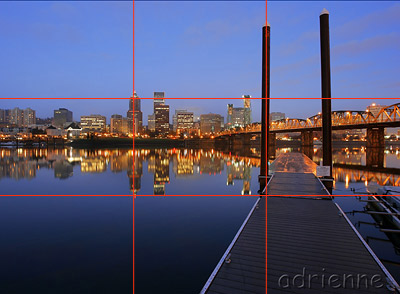
My own Rule Of Thirds Video.
Write a 300-500 word article that tells the audience about a recent multimedia technology that is being or has been developed in the last six months.
 Blu-Ray V HD-DVD.
Over The Last few months the long battle between the two high definition movie formats may have come to an end. Both formats were originally announced back in February 2006, with different movie studios taking sides. Blu-Ray was invented by these group of companies: Hitachi, LC, Mitsubishi, Panasonic, Sharp , Samsung and Sony. HD-DVD was created by Toshiba/NEC. http://www.blu-ray.com/ and http://www.toshibahddvd.co.uk/.
Both technologies use the same blue-violet laser, this means they can focus more sharply than a standard DVD, resulting in a higher quality picture. It also means that far more data can be stored on the discs. There are however bid differences between the discs. Blu-ray packs more data into a single spiral of the disc, this meaning that Blu-ray can fit more data onto each disc than a HD-DVD. The two formats are incompatible.
A blu-ray disc can fit about 25GB of data on a single disc only using a single layer. Double this can be fit on a dual layer blu-ray disc (about 50GB). HD-DVD can only fit 15GB single layer and 30GB dual layer, both these however are far more than a standard DVD which is only 4.7GB single layer and 9GB dual layer.
The most important thing for the consumers however is the price of each technology. For a product to be successful it obviously must function but also be affordable. Blu-ray is seen as a more advanced format, this means the price is quite high. Back in mid 2007 when both formats were competing a blu-ray player cost a staggering £450 while a HD-DVD player came in at £220, half the price. So which would the consumers go for? The more expensive but more widely used Blu-ray format or the smaller HD-DVD format. As time went on Blu-ray started to get more and more backing from the different film studios. The bigger studios were releasing their films on blu-ray rather than HD-DVD, meaning more films were becoming available on blu-ray and not HD-DVD. Because of this consumers were buying more blu-ray films, resulting in an announcement from Toshiba that they would no longer be producing HD-DVD technology.
http://business.timesonline.co.uk/tol/business/industry_sectors/technology/article2300109.ece
So now the battle between Blu-ray and HD-DVD is over can blu-ray takeover from DVD? This totally depends on the consumer. New chart DVDs now retail at about £14.99 while blu-ray discs come in at about £20. Will society be willing to spend extra on the same product for the better picture, specially in the current financial climate? The average blu-ray player is retailing at about £250 while a DVD player can be purchased for £20. Also, to take full advantage of the high definition picture a HD ready TV is needed also costing more money. Its up to the consumer, save money or spend more?
Monday, 3 November 2008
Think about what goes on in your head when you buy something new, take a photo of your favorite designed object and answer the following questions:
 Why is it that we want our belongings to do more for us than to function well?
I have recently purchased a new Sony Ericsson C902 mobile phone. I had a perfectly working mobile phone before getting this one, however. It didn't look anywhere near as good. I bought this phone due to both technical and aesthetic reasons. When i think about it though i would probably still have bought it if it had a 3 Mega pixel camera rather than the 5 it has, this indicates that i based my purchase upon the design.
In the current day it is not just enough to have something that just does its function, it has to do something extra, it has to look good while it performs its function. We want people to see what we have and think WOW! that looks amazing. Consumer goods are all based on looks and it is important to have your product 'accepted' by society. No one would have bought this phone if it wasn't aesthetically pleasing, even if it was the best functioning phone in the world!
Why are we willing, as soon as we can afford it, to pay extra for things with appealing forms?
While it is obviously important for things to function well and do more and better things it is vital that they look good. Going back to mobile phones, the most popular phones are those that look the best. We always want our things to look the best, people want to be able to pull out their mobile phone and people to look and be impressed by it. Everyone wants to have the latest design, when a new product gets released with maybe only slight alterations with its function but drastic design improvements it becomes must have and so much better.
Subscribe to:
Posts (Atom)